Chukar Cherries & Pike Place Market
A Century of History & Community
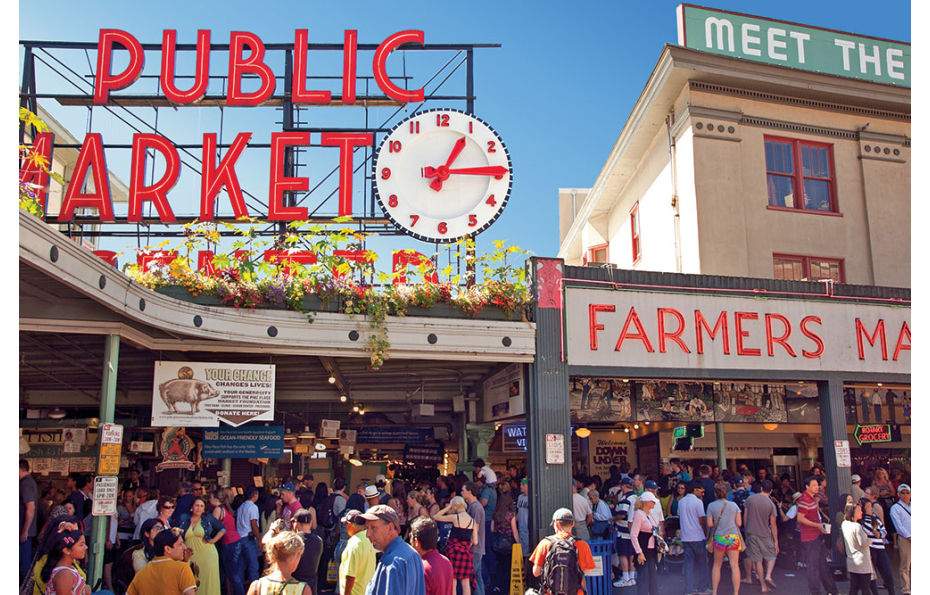
Seattle’s Pike Place Market has been a beloved destination for over a century, cherished for by visitors for its unique charm and by locals for its community initiatives. When the Market first opened its doors in 1907, it marked a revolutionary moment for local farmers, who were finally able to sell their produce directly to the public instead of going through middlemen. By 1909, the Market averaged with 64 farmers per day and welcomed 300,000 visitors each month. Today, it proudly stands as the oldest continuously operating farmers' market in the United States.
 Over its many decades, the market was shaped by a variety of forces: the various local and immigrant farming communities, landowners and developers, by Seattle’s downtown business interests, social service needs, demands of tourism, pedestrian safety, the Seattle art community, and prominent community leaders. It’s a bit like the history of the Wild West—with competing interests, skirmishes and battles, periods of transformation, its leaders, heroes, and villains. For a good read, go to pikeplacemarket.org/market-history/ or wikipedia.org.
Modern Times
Seattle’s Pike Place Market continued through the World War II era. Up to that time most Market farmers were Japanese. After the bombing of Pearl Harbor, the Japanese families were sent to live in Internment camps and their land and holdings taken. They lost generations of wealth. Somehow the Market continued and slowly recovered but we owe its foundation to early Seattle leadership and the Japanese farmers.
 The 1960s and 70s brought a new set of challenges, as debates over ownership and control of the Market's land heated up. Strong civic leadership during this time led to the creation of a historic preservation zone, ensuring the Market's legacy would be protected. This effort culminated in the establishment of the Pike Place Market Preservation and Development Authority (PDA), which continues to oversee the Market's operations today.
To strike a balance between the allocation of daystalls for farmers and craftspeople, the 1983 Hildt Agreement was passed and amended a year later to the Licata-Hildt agreement.
The 1980s also saw the creation of the Pike Place Market Foundation by the PDA, a nonprofit dedicated to raising funds and managing the Market’s vital social services, including a free clinic, senior center, low-income housing, and childcare center—all of which are still thriving.
Chukar Cherries Joins the Market
In the early 1990s, Chukar Cherries was approached to lease a space in Pike Place Market's historic main arcade building, once home to Loback’s Meat Market. Although Loback Meat Co. closed its doors in 1986, its historically protected neon sign remains a beloved fixture in the Market and is proudly displayed above Chukar Cherries’ shop.

Our family started Chukar Cherries in 1988 on our orchard in Prosser, Washington. When the opportunity arose to join Pike Place Market, we eagerly accepted, even though our production site was a three hour drive away in the Yakima Valley. Having lived and worked in Seattle throughout my twenties, I loved Seattle: the people, parks, food, library, waterfront, and entertainment venues—especially Pike Place Market and Paramount Theater.
 Most every Sunday morning I walked down to the Market passing the Paramount Theater. In the Market I enjoyed breakfast with a view of Elliot Bay, bought my week's veggies and fresh flowers, and took in the Market's vendors, vibes, sights and smells. So, when giving an opportunity, Chukar Cherries eagerly signed a lease for a portion of the old Loback space. Despite our production site being 3 hours’ drive east, Chukar was able to bridge the distance, but the berry folks dropped for other ventures.
Decades later, Chukar is a cornerstone “pit stop" for locals and tourists alike at Pike Place Market.

Looking Ahead
In 2008, Seattle voters approved a six-year property-tax levy to fund critical repairs and innovative improvements, which were completed in 2012. The Market development included a redesign of the former Alaskan Way viaduct segment with a promenade and Overlook Walk pedestrian bridge. These updates ensure that the Market remains a vibrant part of Seattle’s community for generations to come.
For more information on the latest developments at Pike Place Market, visit Pike Place Market News.

Chukar Cherries Founder & CEO Pam Montgomery celebrating 35 years